




Higher wages don’t have to mean higher inflation. That could matter for Bitcoin
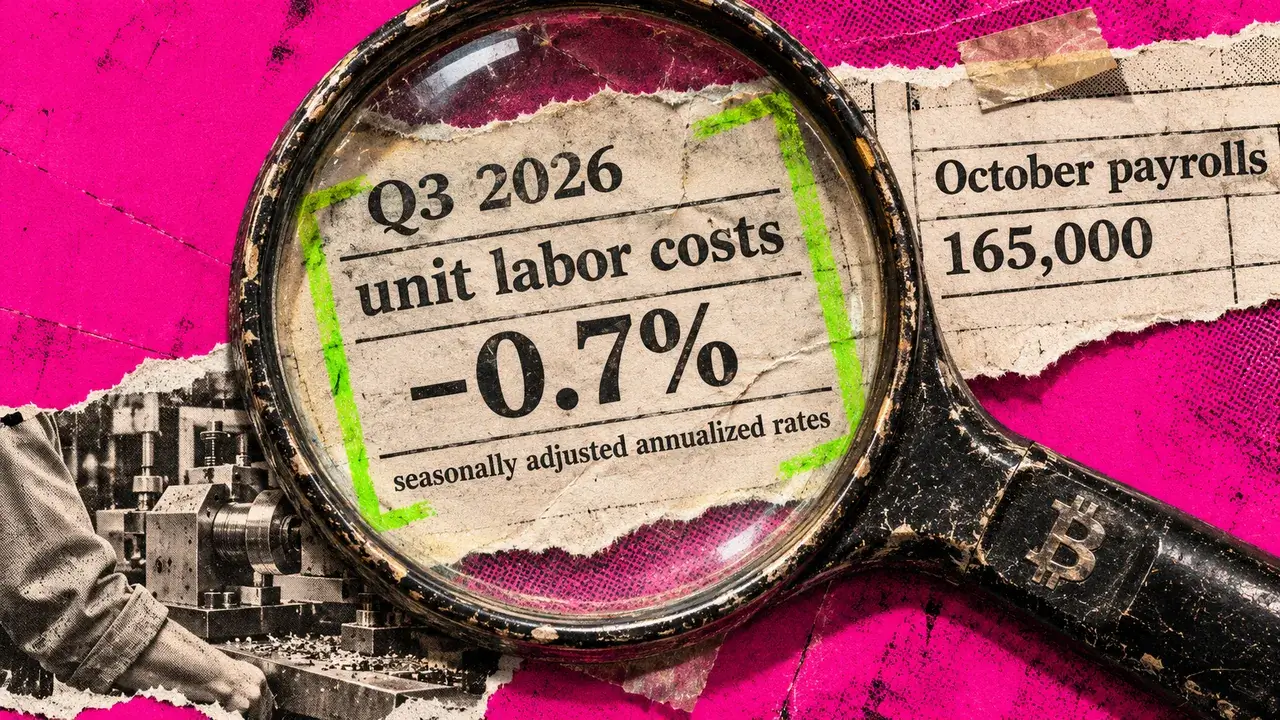
Preliminary Q3 productivity outpaced hourly compensation, offering a cost counterpoint while inflation keeps the Fed cautious. Read the full story on CryptoSlateUnderstand the crypto stories that matter and what to watch next. Get The Catalyst in your inbox
Read it in your languageMachine translation by Google of the publisher's page
Explained in this story
Federal Reserve
The central bank of the United States, which sets US interest rates and supervises banks.
Because the dollar is used worldwide, its rate decisions affect borrowing costs and markets in many other countries.
More about Federal ReserveInflation
The rate at which the general level of prices for goods and services rises over time, usually measured over twelve months.
When prices rise faster than wages, households can buy less with the same income, and central banks may raise interest rates in response.
More about InflationBitcoin
The first and largest cryptocurrency, created in 2009, with a fixed maximum supply and no central issuer.
Its price swings and adoption by funds and companies make it a bellwether for the whole crypto market.
More about BitcoinCryptocurrency
A digital currency secured by cryptography and recorded on a blockchain, without a central bank issuing it.
Crypto prices are volatile, and governments are still deciding how to regulate it.
More about CryptocurrencyMore in Economy







From the blog

YELLOW Token Launches on the XRP Ledger: Why It Matters
The YELLOW token has launched on the XRP Ledger, introducing institutional-grade multisignature security and native liquidity management to attract larger…
 Elara Winter4 min read

Analyst Evaluates Whether XRP Lags Behind Solana as a Dying Network
Crypto analyst Mason Versluis compared XRP and Solana network activity, labeling the XRP Ledger a dead chain due to lower…
Elara Winter3 min read
David Schwartz Shares Latest Outlook on XRP Value
Ripple CTO David Schwartz recently offered a lighthearted market update on XRP amid rising criticism and scrutiny from community members…
Elara Winter2 min read